
We Compared 8 Leading AI Patent Search Agents. Most Buyers Use the Wrong Criteria.
Mai 2026 - The market is suddenly full of AI patent search agents promising autonomous novelty search, instant prior art, one-click invalidity reports, and AI-powered freedom-to-operate analysis. But most buyers are still comparing these tools the wrong way. They often ask, “Did the tools return the same patents?” In reality, that is the wrong question.
Patent Search Is Not an Exact Science
Even experienced professionals using premium tools can spend 8+ hours on a search and still never be certain they found everything.
Why?
Because patent search involves:
multiple valid search paths
subjective relevance judgments
language complexity
classification complexity
different legal objectives
different definitions of relevance
There is rarely one perfect answer.
So expecting any AI system to “find all patents” is unrealistic.
The Right Way to Compare AI Patent Search Agents
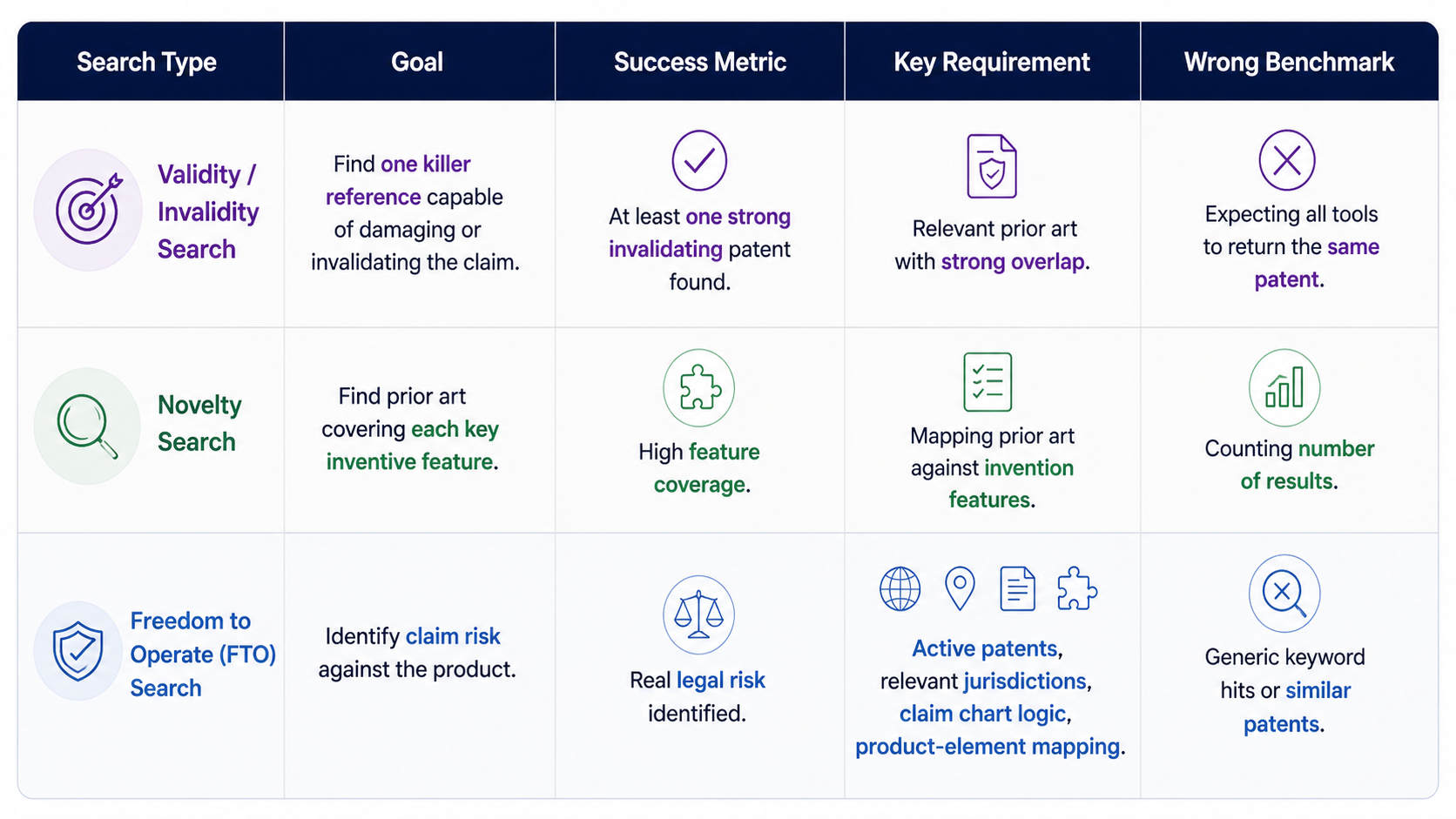
Do not compare by identical outputs -> Compare by mission success.
The 4 Search Methods That Matter
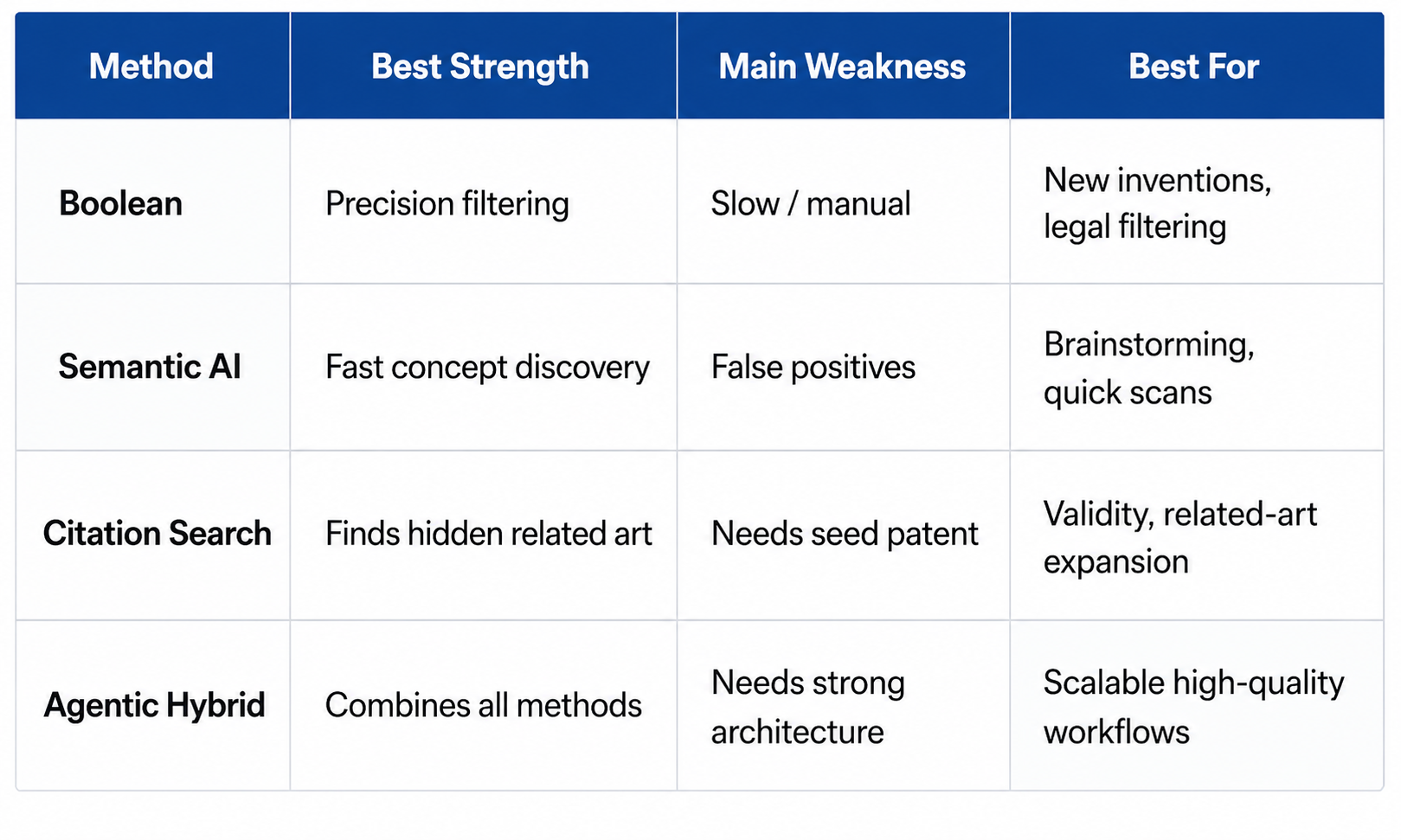
The table below summarizes the four main patent search methods, comparing their strongest advantages, key limitations, and the situations where each performs best.
Why Search Architecture Matters
Many new tools focus on the chatbot layer.
But real search quality often depends on:
retrieval logic
ranking quality
iterative refinement
coverage expansion
evidence traceability
This is where underlying infrastructure matters.

Real Ambercite network graph screenshot
(Connected patents, ranked relationships, seed-patent expansion, search clusters)
Precision Matters More Than Recall
Many vendors talk about “finding more patents.”
That can be meaningless.
What matters is:
Are the returned patents relevant to the mission?
Every irrelevant result costs:
attorney time
analyst time
trust
money
For serious buyers:
Precision beats noise.
Cost Comparison
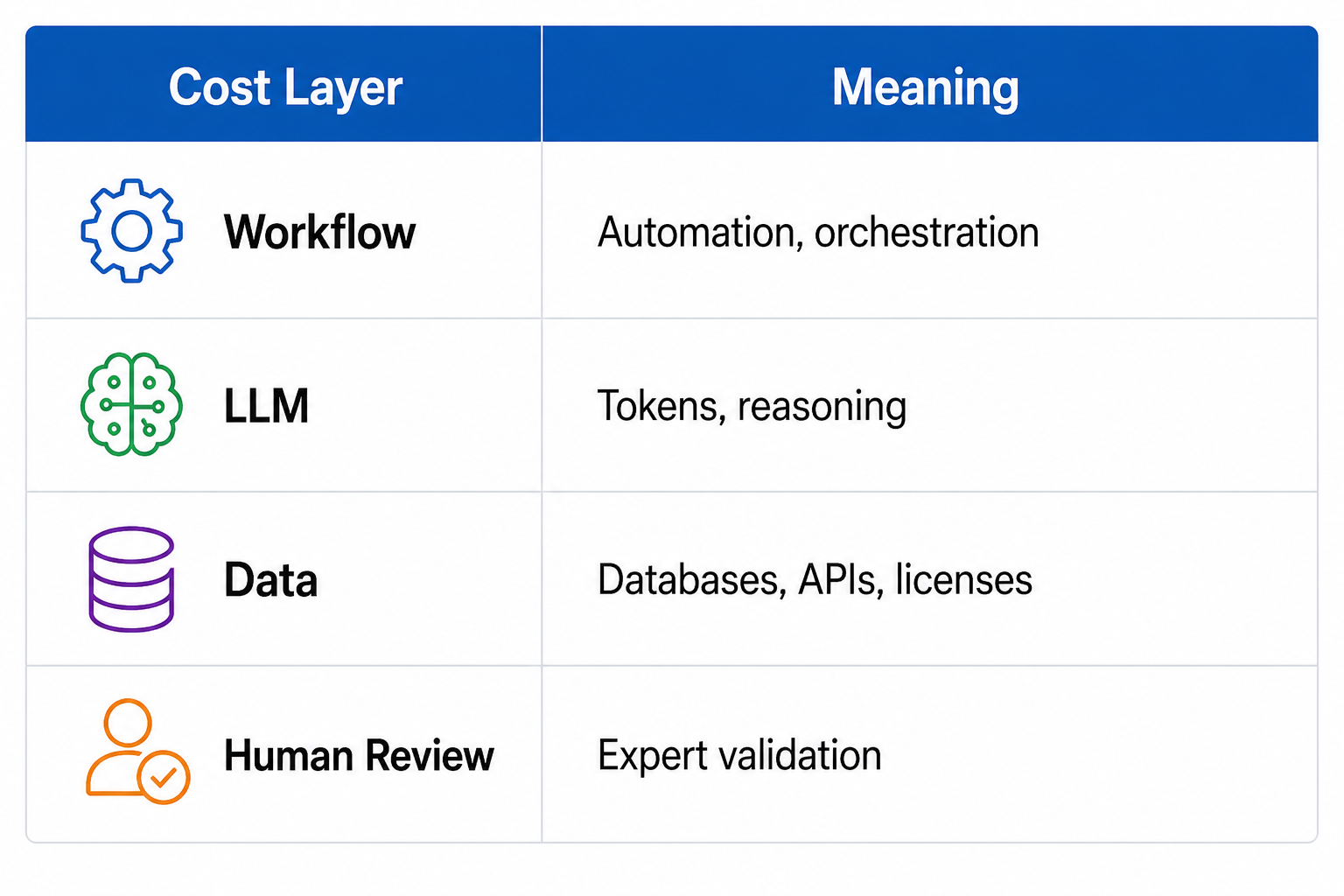
Real cost
Most people compare subscription prices, at scale, this matters more than flashy demos.
Traditional Search vs AI Search
Legacy model:
1 expert
~8 hours work
~€1,500 billed search
Modern AI workflow:
minutes of runtime
human validates result
low marginal cost
scalable volume
That is why the market is changing fast.
8 Leading AI Patent Search Agents Compared
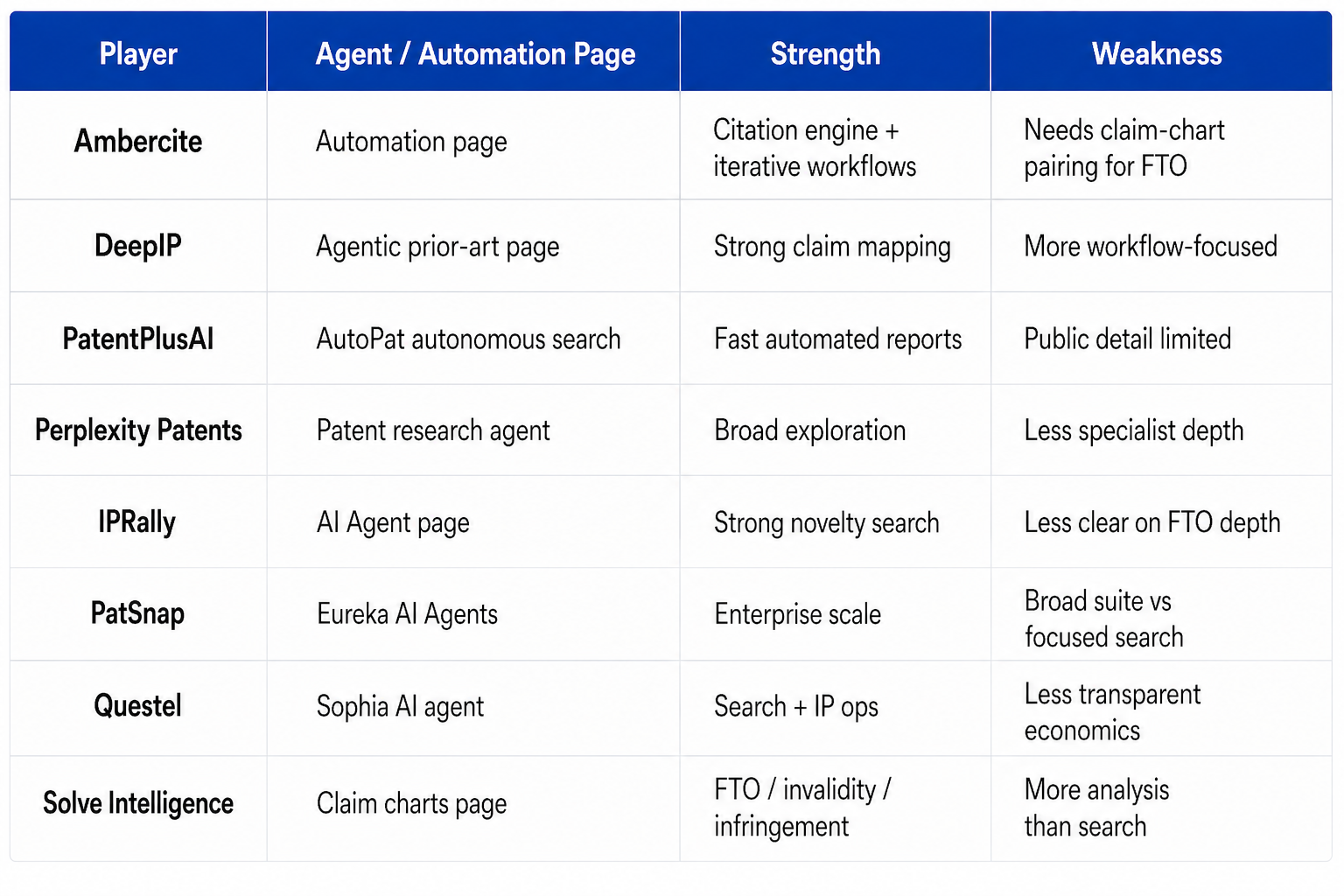
The table compares 8 leading AI patent search players based on their public agent or automation positioning, highlighting each platform’s strongest advantage and its main current limitation.
Why Ambercite Is Structurally Interesting
Long before “AI agents” became fashionable, Ambercite was already promoting combined search methods.
That matters because the market is now rediscovering a core truth:
No single search method is enough.
Many startups appear to build:
AI wrapper first, search depth later.
Ambercite appears built the other way:
search engine first
citation intelligence first
iterative logic first
AI orchestration second
This may prove durable.
The Real Future: Multi-Agent + Human Oversight
Tomorrow’s best workflow may look like:
Agent 1 = broad search
Agent 2 = citation refinement
Agent 3 = claim charting
Human = final judgment
Workflow diagram: Disclosure → Iteration → Report → Decision
This shows how AI search becomes operational inside a real IP workflow.
Final Thought
The winners in AI patent search will not be those who claim to find everything.
They will be the systems that deliver:
reliable outcomes
high precision
scalable economics
expert trust
interoperable workflows
Because in patent search, different correct answers can exist.
What matters is making the right decision faster.